Home » Science and theology (Page 4)
Category Archives: Science and theology
“The Groaning of Creation” – Preface – Chapter 1-1.5
We will begin a new semester this year as we focus on topics in theology and science. This time, we will cover Christopher Southgate’s The Groaning of Creation: God, Evolution, and the Problem of Evil.
Masterclass in Neurotheology
NEUROTHEOLOGY Masterclass
hosted by the Center for Interdisciplinary Research (www.thecir.info)
Sept. 10 – Dec. 10, 2016
This advanced interdisciplinary course meets for eight 3-hour Saturday morning sessions over a 3-month period.
No background in theology or science is required, but a commitment to reading the notes, which are drawn from Ron Choong’s PhD dissertation, is expected.
This inaugural CIR Master-Class will feature Ron Choong’s doctoral work submitted as an interdisciplinary PhD dissertation in 2009 to Princeton Seminary.
A Look Into Jesus’ Conception

“The Nativity”, Lorenzo Lotto (1480 – 1556/57), 1523, oil on panel, National Gallery of Art, Washington D.C.
This week, we will take a mini-break from Confessions and discuss the topic of the Virgin birth and Christology.
We will be going over an article from the November/December 2014 issue of Biblical Archeology Review titled “How Babies Were Made in Jesus’ Time” by Andrew Lincoln. A brief synopsis of the article can be found here; for the complete article you have to order from the website.
Is Religion the Driving Force Behind Human Civilization?
In a brief article in the ‘Opinion‘ section of New Scientist titled “Should We Thank God for Civilization” recently discusses how the current model of how civilizations first developed in human history is being challenged, namely with the discovery of Göbekli Tepe in Turkey.
As the article states:
The answer once seemed clear: food. Farming was more efficient than foraging and so people gravitated towards it. Cities, writing and organised religion soon followed… Yet the people who built them were nomads, not farmers. So the radical suggestion now is that it was not agriculture that drove the revolution, but religion. Some archaeologists oppose this idea, arguing that the ruins could have been domestic buildings, or were once surrounded by dwellings that did not survive. But the ceremony-first model is in the ascendancy, supported by further evidence unearthed in the Levant.
Keep in mind that Göbekli Tepe dates back to around 11,000 BCE. That in and of itself is amazing.
Do Plants Have Souls?

Plant neurobiology is a fascinating area of research in science that is going on today that explores how plants behave, learn, communicate, and respond with each other and their environment.
Here are some of my thoughts on this and how this research might relate with theology.
A Reply from one of our members about the 11/13 post.
Chris wanted to clarify his position on the post i made here about the conversation we had during our last meeting last month that concerned evolution – human evolution in particular.
Here is his statement:
“Perhaps I was unclear in my comments. I apologize.
With respect to whether God directly intervened to make man or it was done by strict
evolution, I am AGNOSTIC. We simply lack the knowledge to decide at this time.
MUCH MORE CRITICALLY, my real point may have been missed.
Whether by God or evolution may not be the real question. The real question is who or
what gives us humans eternal worth?
The real ‘Adam and Eve story’ may be that God DOES directly intervene to imbue us with
eternal value as a totally free gift by His infinite and unknowable Love and through pure fiat.
What does evolution have to do with it? Whether a man or a cockroach what value
without God’s Desire and Will? We could evolve for an infinite amount of time and
reach stupendous levels of intellect, cognition and morality, we will still be (star) dust
and to (star) dust we will return. We will not even possess consciousness of our existence.
What value?
(These are not statements but questions. I appreciate comment, if any. Thanks.)”
– Chris
“Questioning Darwin” – HBO Documentary
This HBO documentary takes a look into the beliefs of creationists and biblical literalists to understand why they so vehemently oppose evolution and Darwinism. That’s one half of the documentary.
The other half looks into the life and beliefs of Charles Darwin, and how so often he is misunderstood.
I would’ve liked if they could have interviewed Christians who embraced evolution or had no problems believing in the comparability of evolution (by natural selection) and Christianity, but they may be in the minority or not as vocal as creationists and evolutionary atheists.
This is a huge topic within American culture, society, and religion that gets really heated at times.
Chapter 21: Enlightenment: Ally or Enemy? (1492 – 1815) – Part I

“A Philosopher lecturing with a Mechanical Planetary” by Joseph Wright, 1766
We will be having our next meeting on Tuesday, August 12.
Please read the first two sections of Chapter 21: Natural and Unnatural Philosophy (1492 – 1700) and Judaism, Skepticism, Deism (1492 – 1700), and please answer one of the following questions:
- What are the origins and purposes of Freemasonry or Masonic practice? What attitudes of the Reformation did they inherit? What connections did they have with more esoteric sources of sacred literature like hermetic books, Neoplatonic writings, and the Jewish Cabbala?
- Describe the impact of the Scientific Revolution of the 16th and 17th centuries. How did the study and progress of science (or ‘natural philosophy’) impact theology during this time? What were some of the religious ideas of Sir Isaac Newton? What was the primary focus of Francis Bacon’s project in extending human knowledge through empiricism and how did it relate to the story of Adam and Eve?
- Describe the impact the 1492 expulsion of the Jewish population in the Iberian peninsula had upon Europe as they spread to other territories. How did they view the Reformation? How did the culture of doubt and skepticism of religion come about as a result of oppressive Church practices like the Iberian Inquisitions? How did the religiously tolerant atmosphere of places like Amsterdam foster religious skepticism?
- Discuss the impact of the thoughts and works of Baruch de Spinoza. What were some of his beliefs about God and religion that many found so dangerous? Describe his two important works Tractatus Theologico-Politicus (1670) and Ethics (1677). Why were these works banned?
- Discuss how the Huguenots were behind many of the anti-religious writings during the Enlightenment. Explain how the historical criticism of the Bible during this time led to serious doubts about its divine inspiration.
- How did the observations of Pierre Bayle, Thomas Hobbes, early Quakers, Isaac La Peyrere, and the discovery of other races of people in the Americas affect thought about the authority of the Church and the authority of the Bible?
- What is deism and how did it gain prominence during the Enlightenment? How did Protestant Evangelicals and Pietist counteract deism?
I know some are really excited to read this part of history and the importance of the Enlightenment, so it should be fertile ground for some interesting discussions and insights in the upcoming weeks ahead. Really looking forward to our discussions.
Please submit your essays by Monday, August 11.
How God Acts – Non-interventionist Divine Action

“The Ancient of Days”, William Blake, 1794
Throughout my life I’ve experienced a wide range of beliefs: from Evangelical to agnostic, then to atheist, then a period of dabbling in Eastern religions, to Pentecostal, then to Presbyterian/Calvinist, and now, well, to where I am today let’s just say.
Once you think you have grasped a firm understanding of God, you come across something that catches you off-guard and makes you re-evaluate everything you’ve believed in. As St. Augustine once said, “God is not what you imagine or what you think you understand. If you understand, you have failed.“
Over the recent years, as I have delved a bit more into the scientific underpinnings of God and theology, as well as my ruminations of the Bible, I’ve adopted more of a “non-interventionist” viewpoint of God.
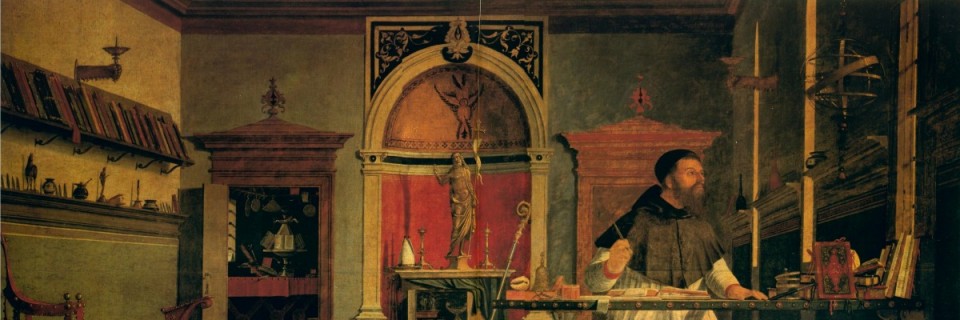
 Project Augustine