Home » Theology (Page 7)
Category Archives: Theology
Do Animals Believe in God? Animal Spirituality

The Entry of the Animals into Noah’s Ark (1613) Jan Brueghel the Elder (1568-1625)
“But ask the beasts, and they will teach you;
the birds of the heavens, and they will tell you;
or the bushes of the earth, and they will teach you;
and the fish of the sea will declare to you.
Who among all these does not know
that the hand of the Lord has done this?
In his hand is the life of every living thing
and the breath of all mankind.”
– Job 12: 7 – 10
Came across a brief yet interesting article about the possibility of animals having a religion or a sense of God or the divine.
Although this might be highly speculative, I do not find it would be surprising at all if some animals had some rudimentary form of religion. Also, I have no problems at all with God communicating with animals in ways that only they can understand but we cannot. Just as animals cannot understand our ways of spirituality, it might just well be the case that we cannot understand their specific ways of worshiping God.
If it is proven that animals have a true sense of the divine (a sensus divinitatis), what would that mean for human spirituality and religion?
How would our ideas and theologies about God, creation, and our (human beings’) place in the universe change in light of this? How would we treat animals – particularly those that we eat as food – in light of this? Would it make a difference? How would it impact the theories of how religion came about in mankind or in general?
I haven’t seen much writing or studies on animal spirituality or religiosity, but I’m intrigued to find out more about it.
Abstract on “Do Animals Have Religion? Interdisciplinary Perspectives on Religion and Embodiment”.
The Tenets of Reformed Theology/Calvinsim

John Calvin (1509 – 1564)
For our next meeting next Sunday, May 18, we’ll focus on the theology of John Calvin.
Please write a one page summary of one doctrine of Calvinism or Reformed Theology that you are familiar with and state your reasons for or against that particular doctrine (or one that you might have strong questions about).
In your summary, see if you spot any logical, philosophical, or even biblical inconsistencies or contradictions within Reformed theology. Or defend your position against any criticisms against Reformed theology- do you agree with a particular Reformed doctrine and state your reasons as to why.
You may go into the historical background and development of a particular doctrine as well.
Update: Chapter 17 – Part II: A House Divided (1517 – 1660) – Book of Common Prayer, Thomas Cranmer, Anabaptists, Tyndale Bible

William Tyndale, before being strangled and burned at the stake, cries out, “Lord, open the King of England’s eyes”. woodcut from Foxe’s Book of Martyrs (1563).
So here are our submissions for today on the middle two sections of chapter 17: Reformations Radical and Magisterial: Anabaptists and Henry VIII and Strassburg, England and Geneva (1540 – 60)
Interestingly, there were no submissions about the gigantic elephant in the room, John Calvin. However, he was a big topic in our discussions today of course; most of the topic focusing heavily on the doctrines of predestination and limited atonement. In the course of our discussion, it seemed evident for the most part that we either flatly rejected those two doctrines or had serious questions about them. In the upcoming weeks, look for more extra thoughts on Reformed theology and Calvinism by others in the group.
Though I do like our approach in tackling topics that we weren’t that familiar with before like Anabaptists and the Book of Common Prayers. For the most part, we’ve been part of the Presbyterian Church and or surrounded by the Calvinism that is so prevalent in our church lives for so many years that we wanted to tackle other lesser known material. When you recycle stuff you already know well, things get somewhat stale or boring after a while.
We also explored the question on whether or not the Reformation was necessary. Most in the group agreed that it was necessary because of all the corruption by the Catholic Church. Although, it was at the expense of where there was no more centralized authority and bringing the Bible to the masses by translating it into the common vernacular, as Luther and Tyndale did, led to personal/private interpretations of the Bible, which of course led to gross misinterpretations of the Bible as well- then that produces misleading and overly complex and unnecessary doctrines as well. And of course, one of the major aftermaths of the Reformation was that it would spawn over 42,000 different Christian denominations worldwide. There are some who believe the Reformation should never have happened and others who say that it was inevitable and necessary happening for the benefit of Christendom overall.
Views on Propitiation and Universal vs. Limited Atonement
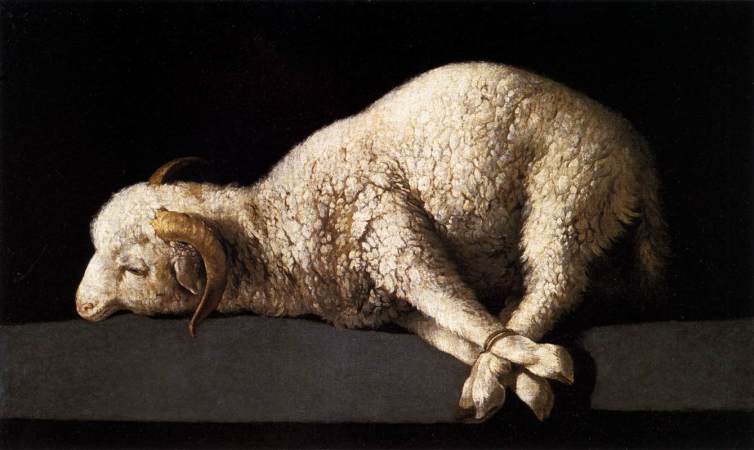
Some views on the Reformed theology of propitiation and questions about whether or not there are biblical justifications for universalism (i.e. that all will be saved).
Submitted by Michael.
Predestination/Election – A Biblical Perspective

What does this mean? Is this interpretation even in the Bible?
Since the group will be encountering John Calvin very soon in MacCulloch’s book, I thought I’d get a head start and write about one of the most famous and also controversial doctrines of the Protestant/Reformed theology – predestination or election.
It’s definitely a hot potato topic and if you want to rile up a bunch of Christians and see some heated conversations, just introduce the topic of predestination, sit back, enjoy, and watch the sparks fly.
Well, here’s my entry into this eternal theological boxing ring for all its worth.
Also, as you’ll see, it’s listed on a new sub-menu called “Reformed Theology” under “Theology” at the top menu bar.
Though I know what I present won’t be a novel position by any means, it did give me pause to think when I first read it in Eugene Boring and Fred Cradock’s The People’s New Testament Commentary (Westminster John Knox Press, 2004).
I’d love to hear your thoughts about this topic as well, so please do share if you have any.
UPDATE: New Submissions for Chapter 17: A House Divided (1517 – 1660) – Part I: Martin Luther and Huldrych Zwingli

The Marburg Colloquy is the name given to the meeting between Ulrich Zwingli and Martin Luther in 1529.
So here are the new updates from last night’s meeting. I also added Chris’ submission for last chapter that deals with anti-semitism here below Michael’s entry.
Another interesting discussion once again last night. We covered a lot of material and spent a lot of time on Protestant theology.
Chapter 17: A House Divided (1517 – 1660) – Part I – Martin Luther and Huldrych Zwingli
For next week we will cover the first two sections of Chapter 17: A Door in Wittenberg and The Farmers’ War and Zwingli.

Martin Luther (1483 – 1546), by Lucas Cranach, 1529
We will be going into the heart of the Protestant Reformation by focusing on Martin Luther in Germany (or the Holy Roman Empire I should say specifically because the state of Germany didn’t exist during this time) and Huldrych Zwingli of the Swiss Confederacy.
Update: Chapter 16 – Perspectives of the True Church: Part II (1492 – 1517) – The Expulsion of the Jews in Spain, the Spanish Inquisition, and Erasmus
Here are our responses from last night as we finished up Chapter 16.
We focused on the Spanish Inquisition and the legacy that Erasmus left in influencing the Protestant Reformation.
We had a lively discussion last night, mainly spurned on by Erasmus’ preference of Origen’s theology over and against Augustine. We discussed the nature of original sin, and I was surprised to find out that basically half the group still held on to (or were at least somewhat reluctant about abandoning) the doctrine of original sin. Though we all agreed with the basic understanding of human evolution, most of the group still believed that God somehow interfered in the process and specially endowed human beings with the capacity to know and understand God. (I personally am in the very small minority of believers who believe that was not the case – in terms of divine interference in human evolution – but I’ll leave that for a future post perhaps.)
Does God Change in Response to Suffering? Motlmann, von Speyr, the Cross, and the Suffering of God, the Trinity

Matthias Grünewald, Isenheim Altarpiece, chapel of the Hospital of Saint Anthony, Isenheim, Germany, c. 1510-15, oil on wood
Undoubtedly, suffering and death changes us in some degree or another. It’s a given in life. A death of a close friend, parent, or loved one can profoundly affect the outlook of one’s life.
I can only imagine the unimaginable pain a parent has to go through if their child dies. It would undoubtedly change the parent’s life.
Is it the same for God then? Did God change when he experienced Jesus’ death? Does God himself change in response to suffering, pain, and death?
Plato and Theology
In order to really get a good understanding of Christian theology and Christian philosophy, you first need a solid foundation of understanding Plato’s philosophy.
There’s just no way around it. Even Paul’s writings contain Platonic thought and ideas.
Plato’s philosophy still heavily influences Christianity today as well – for instance, our ideas about body/soul dualism, the afterlife, the spiritual being greater than the flesh/material, repentance, conversion, etc.
Here are some summaries we wrote about Plato’s and Greek philosophy’s impact on Christian thought here in terms of church history.
Here is Prof. Andrew Davison of St. Johns College, Nottingham, UK, talking about how Plato influenced Christian philosophy – especially that of Augustine, who was heavily influenced by Plotinus and Neoplatonism.
 Project Augustine