Home » Philosophy (Page 2)
Category Archives: Philosophy
Can Theology Go Through Kant?

After being reintroduced to Immanuel Kant’s thought after our last session on MacCulloch’s book, his philosophy intrigues me and I see the inherent and serious challenges Kant poses in reference to theistic epistemology.
A good introduction to Kant’s philosophy of religion can be read here on the Stanford Encycopedia of Philosophy website. (A supplemental entry on Kant’s influence on religion can be found here.)
After writing my last church history essay on Kant, that prompted me to delve deeper into Kant’s philosophy and his thoughts about God, religious epistemology and morality. One book I got in specific reference to Kant’s subsequent impact on theology is Kant and Theology at the Boundaries of Reason by Chris L. Firestone.

Chapter 21: Enlightenment: Ally or Enemy? (1492 – 1815) – Part II (1650 – 1750)
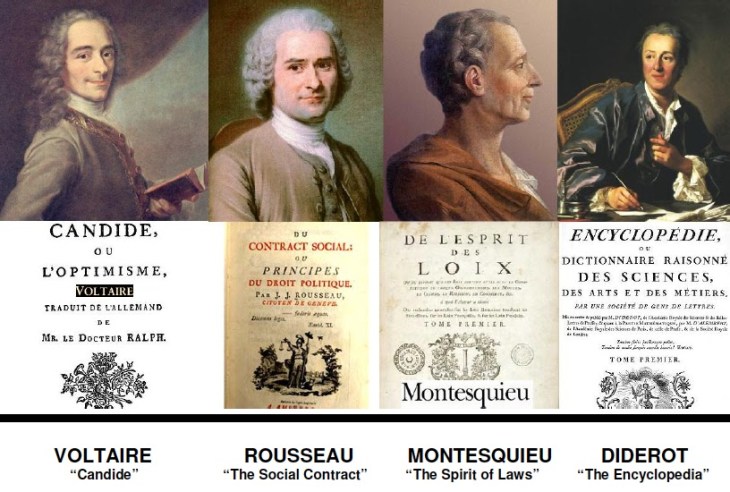
For our next meeting on Tuesday, August 26, please read the next three sections of Chapter 21: Social Watersheds in the Netherlands and England (1650 – 1750), Gender Roles in the Enlightenment, and Enlightenment in the Eighteenth Century.
UPDATE – Chapter 21: Enlightenment: Ally or Enemy? (1492 – 1815) – Part I (1492 – 1700)

Benoît Louis Prévost, An engraving from the 1772 edition of the “Encyclopédie”. Truth, in the top center, is surrounded by light and unveiled by the figures to the right, Philosophy and Reason.
Today we delve into the first part of a series of studies on the Age of Enlightenment and its effects on Christianity.
Here, we delve into challenges to the authority of the Church and the Bible, the philosophy of Baruch de Spinoza, and the aftermath that the 1492 Expulsion of the Jews in Spain and Portugal had in fostering religious skepticism and doubt.
Chapter 21: Enlightenment: Ally or Enemy? (1492 – 1815) – Part I

“A Philosopher lecturing with a Mechanical Planetary” by Joseph Wright, 1766
We will be having our next meeting on Tuesday, August 12.
Please read the first two sections of Chapter 21: Natural and Unnatural Philosophy (1492 – 1700) and Judaism, Skepticism, Deism (1492 – 1700), and please answer one of the following questions:
- What are the origins and purposes of Freemasonry or Masonic practice? What attitudes of the Reformation did they inherit? What connections did they have with more esoteric sources of sacred literature like hermetic books, Neoplatonic writings, and the Jewish Cabbala?
- Describe the impact of the Scientific Revolution of the 16th and 17th centuries. How did the study and progress of science (or ‘natural philosophy’) impact theology during this time? What were some of the religious ideas of Sir Isaac Newton? What was the primary focus of Francis Bacon’s project in extending human knowledge through empiricism and how did it relate to the story of Adam and Eve?
- Describe the impact the 1492 expulsion of the Jewish population in the Iberian peninsula had upon Europe as they spread to other territories. How did they view the Reformation? How did the culture of doubt and skepticism of religion come about as a result of oppressive Church practices like the Iberian Inquisitions? How did the religiously tolerant atmosphere of places like Amsterdam foster religious skepticism?
- Discuss the impact of the thoughts and works of Baruch de Spinoza. What were some of his beliefs about God and religion that many found so dangerous? Describe his two important works Tractatus Theologico-Politicus (1670) and Ethics (1677). Why were these works banned?
- Discuss how the Huguenots were behind many of the anti-religious writings during the Enlightenment. Explain how the historical criticism of the Bible during this time led to serious doubts about its divine inspiration.
- How did the observations of Pierre Bayle, Thomas Hobbes, early Quakers, Isaac La Peyrere, and the discovery of other races of people in the Americas affect thought about the authority of the Church and the authority of the Bible?
- What is deism and how did it gain prominence during the Enlightenment? How did Protestant Evangelicals and Pietist counteract deism?
I know some are really excited to read this part of history and the importance of the Enlightenment, so it should be fertile ground for some interesting discussions and insights in the upcoming weeks ahead. Really looking forward to our discussions.
Please submit your essays by Monday, August 11.
What is God Like? Does God Change? Is Everything Predetermined/Predestined by God? Has God Settled the Future? – Greg Boyd
Does God change?
Does God know the future?
In most churches today, if you would answer in the affirmative to the first question and negative to the second, you’d likely be branded a heretic or “liberal”. Many people seem to be so set in his or her ways that they won’t even carefully consider a different opinion or viewpoint about God or other theological matters. But it makes sense – for many, his or her view of God that they’ve grown up with or have adopted over the years, they’ve formed a close, emotional (not just psychological or spiritual) bond to it that’s hard to let go.
The very notion of entertaining the thought of God NOT knowing the future or that he can experience new things, or that he is NOT in absolute, complete control of everything (his omniscience, omnipotence, etc.) can be quite (emotionally) unsettling to even consider. (As a criticism of open theism, it may seem to anthropomorphize God a bit too much.)
Much of theology these days (and same goes to a vast majority of the view of God that is communicated through pulpits every week on any given Sunday) seem to be stuck in medieval or Reformation times, and seem to be unwilling to budge. As you know, much of history, science, technology, etc. has changed and progressed since that time, and the Church has had a hard time (or a very stubborn reluctance in) catching up to the rapid changes that are happening in our modern world, so it faces a crisis of remaining relevant to future generations if the Church continues on this trend I believe.
Perhaps our theology and understanding of God need to be updated.
Interesting viewpoints on God’s nature and action according to open theism.
From the website:
Does God know all future events? Only if the future is in some real sense already determined. God, to be God, must know every true proposition, including all about the future. But if the future is truly ‘open’, not even God could know the future because there are no true facts about the future to know. Why is this disturbing?
Has God Settled the Future? – Greg Boyd
Gregory A. Boyd’s profile and an interesting series on God and theology below his profile.
“Imagining Barth and Nietzsche in Conversation” by Daniel Migliore and the Third Ed. of “Faith Seeking Understanding: An Introduction to Christian Theology”

Friedrich Nietzsche (1844 – 1900), German philosopher

Karl Barth (1886 – 1968), German theologian
Just as Project Augustine celebrates its two-year anniversary this month, Eerdmans Publishing will have the 3rd Edition of Faith Seeking Understanding: An Introduction to Christian Theology out next month.
Project Augustine started off with going through all of the 2nd Edition of Daniel Migliore’s Faith Seeking Understanding which you will find here in July of 2012.
According to his article, Mr. Migliore will include a brand new section of an imaginary conversation between German philosopher Friedrich Nietzsche and German theologian Karl Barth.
From the article:
In my dialogue I try to avoid giving all the good lines to one of the speakers and reducing the other to a mere foil. My reason for doing so is that Nietzsche’s critique, even if dated, is in some respects devastating, and if I understand Barth’s way of doing theology aright, his response to the atheist challenge is not to try to defeat it by a clever apologetic strategy but instead simply to present as clearly as he can the Christian understanding of God centered in the person and work of Jesus Christ as attested in Scripture.
Our group took great joy going over Prof. Migliore’s book and we look forward to the new edition coming out next month.

Daniel L. Migliore is Charles Hodge Professor Emeritus of Systematic Theology at Princeton Theological Seminary
UPDATE: Chapter 20 Protestant Awakenings (1600 – 1800) – Part I: Protestants and American Colonization & The Fight for Protestant Survival (1600 – 1800)
William Penn, founder of Pennsylvania, (1644 – 1718)
We begin with the British colonization of eastern North America and the impact Protestantism had there.
Here are our essays concerning slavery, the Quakers, William Penn, and John Locke.
Also, Michael placed a late submission for Chapter 19 concerning the influence of pagan practices inherited from the Roman Empire into Christian traditions we often take for granted. Many Christians are quick to dismiss the often categorized “pagan” aspects of other religious traditions such as voodoo, without realizing the blatant paganism inherent within Christian practices itself. Before we quickly judge others, it’s best to know our history and where our beliefs and traditions originated from.
Time-lapse History of Europe and the Middle East in the Last 1000 Years, Emergence, and Divine Sovereignty
I came across this rather interesting time-lapse map of Europe, Western Russia, and present-day Turkey, where you see the dynamic evolution of human history over the course of a millennia which is still going on right now.
(Also, history is so much more kick-ass with music from the movie “Inception” in the background.)
For a little over a year now we have been studying the history of the Christian Church and delving quite a bit into the history of Europe from ancient times, through the Roman Empire, the Middle Ages, the Byzantine Empire, and now into the Reformation, so the vast movements in this map should be familiar to those in our group.
I was never much into history, but if you want to be a serious student of theology, a solid knowledge and foundation in history is invaluable to see how ideas and beliefs began and evolved over time, and how everything fits together. Studying history may radically alter your beliefs even.
Also, in my spare time, I’ve been delving into the science of emergence by reading Emergence: The Connected Lives of Ants, Brains, Cities, and Software by Steven Johnson. Here’s an excerpt of the book that I read today that directly relates to history and the map shown above, specifically in terms of information and energy flow as cities, civilizations, and countries grow more and more complex over time.
 Project Augustine